
Best Bird Seed Mix for Winter: 6 Picks for Cold-Weather Feeders
Six winter bird seed products compared on high-energy ingredients, fat content, bag size, and feeder fit, with what owners report.
 Updated October 31, 2026
The best bird seed mix for winter is built on high-energy ingredients, with black oil sunflower and peanuts near the top of the ingredient list and enough fat to show it. Our pick is Kaytee Songbird Blend. Per Kaytee, it is black oil sunflower, cracked corn, millet, peanuts, and striped sunflower, with a guaranteed minimum of 22% crude fat, and Kaytee calls it one of the highest energy wild bird foods available. That ingredient list covers the foods Audubon names for good mixed seed in its winter feeding advice. Kaytee sells it for year-round feeding, so it earns the top spot on ingredients and fat, not on a winter claim. We compare six high-energy seed products to put out in the cold months: four loose mixes, one pressed seed cake, and one finch blend for the goldfinches and siskins that work feeders in winter.
We compared the six on ingredients, the fat guarantee where the maker prints one, what each listing says about winter or energy, bag size, and the feeders each one is made for. Two kinds of sources set the criteria. Audubon’s Top 10 Foods for Winter Bird Feeding calls black oil sunflower the “hamburger” of the bird world and describes good mixed seed as having “a large amount of sunflower seed, cracked corn, white proso millet, and perhaps some peanut hearts.” Project FeederWatch says black oil sunflower is high in energy and that peanuts are high in energy and protein.
This guide covers choosing seed for backyard feeders in winter. It is not advice on caring for sick or injured birds; if you find one, contact a licensed wildlife rehabilitator or your state wildlife agency.
We earn a commission from qualifying purchases made through links on this page. Commissions never affect our rankings or FeederBirdLab Scores.
Our Top Winter Bird Seed Picks
- Best Overall: Kaytee Songbird Blend. Its maker lists sunflower, cracked corn, millet, and peanuts, the foods Audubon names for good mixed seed (Kaytee does not say which millet), with black oil sunflower first and at least 22% crude fat, per Kaytee. The only other mix here with all four leads with corn.
- Best Small Bag: Wagner’s 82072 Gourmet Nut & Fruit. The smallest bag reviewed here, 5 lb, and the only size Wagner’s sells, with nuts, sunflower kernels, and fruit and no filler, per Wagner’s. Kaytee and Lyric also list 5 lb sizes of their mixes on their own sites.
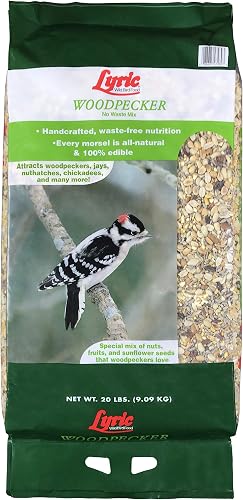
- Best High-Fat Mix: Lyric Woodpecker No Waste Mix. A guaranteed minimum of 35% crude fat on Lyric’s label, the highest fat figure any maker in this guide prints, from shelled peanuts, pecans, pistachios, and sunflower kernels.
- Best Bulk Bag: Lyric Wild Bird Mix. The largest bag reviewed, 40 lb per the listing, of cracked corn, white proso millet, two kinds of sunflower, peanuts, and safflower, which Lyric pitches at ground-feeding birds such as doves and sparrows.
- Best Seed Cake: Audubon Park Nut & Fruit Snack Stack. The only pressed cake here, sold as six individually wrapped discs that the listing calls no-melt. Audubon Park is a brand name, and nothing in the listing ties it to the National Audubon Society.
- Best Winter Finch Blend: Kaytee Nyjer and Sunflower Chip Finch Blend. The only product here with nyjer, mixed with fine sunflower chips, and the listing says its oil-rich formula supports birds especially during nesting season and winter. The listing uses a longer product name; we shorten it here.
If fat content alone decides it for you, the Lyric Woodpecker label guarantees more fat than our top pick (35% against 22%). We still put the Kaytee blend first because it is a broad songbird mix for an ordinary tube, hopper, or tray, while the Lyric mix is built around nuts and fruit for woodpeckers, jays, and other clinging birds and calls for a feeder that protects it from the weather.
Winter Bird Seed Compared
Ingredients come from the maker’s page or label where we found one, otherwise from the Amazon listing. Crude fat is the guaranteed minimum on the maker’s analysis; “Not published” means we found no figure from the maker. Bag size is the listing reviewed.
| Product | Form | Ingredients | Crude fat (min.) | Size (per listing) | Feeders named | Winter or energy claim (per listing) |
|---|---|---|---|---|---|---|
| Kaytee Songbird Blend (Kaytee) | Loose mix | Black oil sunflower, cracked corn, millet, peanuts, striped sunflower, soybean oil (Kaytee) | 22.0% (Kaytee) | 7 lb | Not named | “High energy,” for year-round feeding |
| Wagner’s 82072 Gourmet Nut & Fruit (Wagner’s) | Loose mix | Nuts, sunflower kernels, and fruits, not itemized (Wagner’s) | Not published | 5 lb | Tube, hopper, or platform (Wagner’s) | “Healthy proteins and fats,” year-round |
| Lyric Woodpecker No Waste Mix (Lyric label) | Loose mix, no shells | Shelled peanuts, corn, sunflower kernels, pecans, pistachios, shelled pumpkin seed, dried cranberries, raisins (Lyric) | 35.0% (Lyric) | 20 lb | Woodpecker or peanut feeder; hopper or tray that keeps food out of the weather (Lyric) | High protein and fat, for winter foraging |
| Lyric Wild Bird Mix (Lyric) | Loose mix | Cracked corn, white proso millet, black oil sunflower, black striped sunflower, shelled peanuts, safflower (Lyric) | Not published | 40 lb | Tube, hopper, tray with or without cover, window (listing) | Over 20% sunflower, fuels “winter foraging” |
| Audubon Park Nut & Fruit Snack Stack (Audubon Park) | Pressed seed cake, 6-pack | White millet, black oil sunflower, safflower, peanuts, raisins, striped sunflower, gelatin, chipped sunflower, red millet (Audubon Park) | Not published | 6 cakes; cake weight not listed | Audubon Park Snack Stack Feeder only | “High-energy,” no-melt, year-round |
| Kaytee Nyjer and Sunflower Chip Finch Blend | Finch blend, no shells | Nyjer and fine sunflower chips (listing) | Not published | 10 lb | Tube, mesh sock, small-port finch feeders (listing) | “High-energy,” oil-rich, “especially during nesting season and winter” |
Our ranking reflects our overall assessment of specifications, maker information, and owner reviews. The FeederBirdLab Score is a separate measure based on Amazon customer ratings with a limited editorial adjustment, and it does not set the order.
| Product | FeederBirdLab Score About FeederBirdLab ScoreThe FeederBirdLab Score is our own rating out of 10. It starts from the average Amazon customer rating, may be adjusted by the editor by up to 0.5 points, and is never influenced by brands, retailers, or affiliate commissions. Learn more › | |
|---|---|---|
 Kaytee Songbird Blend |
8.9/10 | Buy |
 Wagner's 82072 Gourmet Nut & Fruit |
8.8/10 | Buy |
 Lyric Woodpecker No Waste Mix |
8.8/10 | Buy |
 Lyric Wild Bird Mix |
8.6/10 | Buy |
 Audubon Park Nut & Fruit Snack Stack |
8.6/10 | Buy |
 Kaytee Nyjer and Sunflower Chip Finch Blend |
8.4/10 | Buy |
Kaytee Songbird Blend
A seed blend for feeders that draw a range of small and mid-size songbirds; the listing names no fruit. According to the Amazon listing, it combines two types of sunflower seed with peanuts and millet, and it names cardinals, chickadees, titmice, finches, nuthatches, grosbeaks, juncos, indigo buntings, and jays as target birds. The listing's ingredient description leaves out corn, but its specification table and Kaytee's own ingredient list include cracked corn, and Kaytee guarantees at least 22% crude fat. Several owners on this listing describe a variety of species at their feeders, though one calls it a bit messy and another watched house finches knock seed to the ground. Look elsewhere if you want nut and fruit pieces or a listing that states proportions.
Pros
- Sunflower, peanuts, and millet, per the listing
- Millet, which Project FeederWatch calls a favored food of smaller ground-foraging birds
- At least 22% crude fat, per Kaytee
Cons
- Listing description omits the corn that Kaytee lists
- One owner calls it a bit messy
Wagner's 82072 Gourmet Nut & Fruit
A nut-and-fruit mix for decks, porches, and patios. According to the Amazon listing, it contains five foods, fruits and nuts, and you will not get shell waste or seed growth, though the listing does not name the ingredients. Owners on this listing describe jays, woodpeckers, and cardinals eating it, several say squirrels go after it, and one says the birds leave the raisins. Look elsewhere if squirrels already empty your feeders or you need more than 5 lb at a time.
Pros
- No shell waste or seed growth, per the listing
- Fruit content may draw birds that do not eat seed, per the listing
- Listed for cardinals, chickadees, and jays
Cons
- Ingredients not itemized on the listing
- Squirrels eat it too, according to several owners
Lyric Woodpecker No Waste Mix
A shell-free nut, fruit, and seed mix for yards visited by woodpeckers, jays, nuthatches, and chickadees, the birds Lyric lists for it. Per Lyric, it contains shelled peanuts, corn, sunflower kernels, pecans, pistachios, shelled pumpkin seed, dried cranberries, and raisins, with at least 35% crude fat, and Lyric says to use it in a feeder that protects it from the weather. The Amazon listing names hopper, mesh tube, and covered tray feeders. One owner reports lots of woodpeckers at it and another lists Steller's jays, northern flickers, and nuthatches, while a third found a lot of dried fruit and hardly any nuts. Look elsewhere if you only have an open tray or want a small bag; this listing is a 20 lb bag.
Pros
- At least 35% crude fat, per Lyric
- No shells: peanuts, nuts, kernels, and fruit
- Listed for hopper, mesh tube, and covered tray feeders
Cons
- Needs a feeder that keeps it out of the weather, per Lyric
- One owner found mostly dried fruit and few nuts
Lyric Wild Bird Mix
A large-bag mix for yards with doves, sparrows, juncos, and other birds that feed on or near the ground. Per Lyric, it contains cracked corn, white proso millet, black oil and black striped sunflower, shelled peanuts, and safflower, with over 20% sunflower, and the Amazon listing says it fuels activity from winter foraging to spring nest building. The listing names tube, hopper, tray, and window feeders. Lyric gives no proportions beyond that. One owner says the sunflower hulls make a major mess, and another calls it too much filler. Look elsewhere if you feed from one small feeder or want a mix led by sunflower.
Pros
- 40 lb bag for several feeders
- Corn and millet for ground-feeding birds plus sunflower and peanuts
- Listed for tube, hopper, tray, and window feeders
Cons
- Corn is the first ingredient, per Lyric
- Sunflower hulls leave a mess, one owner says
Audubon Park Nut & Fruit Snack Stack
Pressed seed cakes for people who already use the Audubon Park Snack Stack Feeder. According to the Amazon listing, the six individually wrapped, disc-shaped cakes include peanuts, sunflower seeds, safflower, and raisins, are packed with protein and fat, and are no-melt for year-round feeding; you stack up to three in the feeder. Audubon Park's own ingredient list starts with white millet and includes red millet, which the listing does not mention. Audubon Park is a brand name with no stated link to the National Audubon Society. Look elsewhere if you do not have the Snack Stack Feeder or want sunflower and nuts first.
Pros
- Six individually wrapped cakes
- Listed as no-melt for year-round feeding
- Less loose seed to clean up, per the listing
Cons
- Fits only the Snack Stack Feeder
- Maker lists white millet as the first ingredient
Kaytee Nyjer and Sunflower Chip Finch Blend
A finch blend for goldfinches, house finches, purple finches, and other small-billed birds at a tube or mesh feeder in winter. According to the Amazon listing, it is nyjer and fine sunflower chips with no shells, in an oil-rich, high-energy formula meant especially for nesting season and winter, and it suits tube feeders, mesh socks, and small-port feeders. We could not find this blend on Kaytee's site, so these details come from the listing only. Look elsewhere if you want one food for a hopper or tray; nyjer needs a feeder with very small ports.
Pros
- Nyjer and sunflower chips with no shells, per the listing
- Listed for tube, mesh sock, and small-port feeders
- Listing names winter feeding
Cons
- Not found on Kaytee's site
- Draws finches mainly, not the whole feeder crowd
How We Chose
We searched Amazon US for winter bird seed, winter wild bird food blends, and high-energy bird seed. Each product had to be sold new, average at least 4.0 out of 5 from at least 30 owner ratings, come from a brand on our reviewed list for bird food, and be described for winter, cold weather, or high energy and fat somewhere in its own listing. We then opened each maker’s site to check the ingredient list and, where the maker prints one, the guaranteed analysis. We took no more than three products from one brand.
Two products that met those checks were left out after a closer read. A straight bag of nyjer is a single seed, not a mix, so it falls outside a guide to seed mixes. A second finch blend from Kaytee lists millet as its first ingredient on Kaytee’s site, and its listing makes no claim about winter. One finch blend stays in this guide for winter finches. It is a compromise: FeederWatch prefers to feed nyjer by itself rather than in a mix, but this blend pairs nyjer only with fine sunflower chips and is sold for finch feeders, not for a general mix.
For the top spot we look first at products from a brand on our list with 1,000 or more owner ratings and an average of at least 4.2, then pick the one that best fits the keyword. Kaytee Songbird Blend met that bar, its maker’s ingredient list covers the foods Audubon names for good mixed seed, and Kaytee still sells it in the 7 lb size reviewed here. The other five follow in our research order. The FeederBirdLab Score on each card is a separate measure and does not set the order, as explained in how we calculate the score. None of the six listings conflicted with the maker clearly enough to change a score. Our full method is on the How We Review page.
How to Choose the Best Bird Seed Mix for Winter
Audubon’s guide to winter bird feeding says many species rely most heavily on feeders in winter, when food is scarce, and FeederWatch describes feeding as an extra resource during harsh winters. Year-round, choosing a seed mix comes down to ingredients and filler. For the cold months, a few more things matter.
Put energy first, then check the fat guarantee
Audubon’s winter list includes the high-energy foods: black oil sunflower, peanuts (“high-protein, high-energy”), and suet (“high-fat”). Audubon also says good mixed seed has a large amount of sunflower, so check the order of the ingredient list. Kaytee Songbird starts with black oil sunflower. Lyric Woodpecker starts with shelled peanuts. Lyric Wild Bird Mix and the Audubon Park cake start with grain: cracked corn for the Lyric mix and white millet for the cake, per their makers.
Some makers also print a guaranteed analysis, and the crude fat line is the most useful number on it for winter. It is a minimum, not an average. Kaytee guarantees at least 22% for the Songbird Blend and Lyric at least 35% for the Woodpecker mix. Wagner’s, Audubon Park, and the finch blend’s listing give no figure we could find, and the Lyric Wild Bird Mix label we opened did not give one we could read, so for those you are relying on the ingredient list and words like “high energy.”
Compare the mix to Audubon’s good mixed seed
Audubon’s description is specific: a large amount of sunflower, cracked corn, white proso millet, and perhaps peanut hearts. It also warns that bad mixed seed is padded with filler that most birds will not eat. Kaytee Songbird Blend contains all four foods, per Kaytee, though Kaytee lists the millet without naming the type. Lyric Wild Bird Mix also has all four, plus safflower, but corn comes first, and Lyric only says the bag is over 20% sunflower. Lyric publishes no proportions beyond that, so how much of the bag is corn is not something we could confirm. Lyric’s Woodpecker mix has no millet on its label, which suits clinging birds but leaves less for birds on the ground.
Keep the seed dry and the feeder clear
Winter seed fails when it gets wet or packed with snow. Audubon’s winter tips say to keep feeders clear of snow and to shake seed feeders before refilling to loosen compacted seed. FeederWatch’s feeder guide notes that a hopper’s roof protects seed against the weather, that tube feeders keep seed fairly dry, and that a roof on a platform helps keep seed dry. Lyric’s page for the Woodpecker mix says to always use a feeder that protects the seeds and nuts from the weather. One Kaytee Songbird owner who uses hopper and tray feeders says the seed does not turn mushy quickly if it gets a bit damp, though that is one owner’s report. If your only feeder is an open tray, plan on clearing it after every storm.
Plan a separate feeder for winter finches
Audubon’s winter list says nyjer is eagerly eaten by small finches, including goldfinches, pine siskins, and redpolls, and that it needs a thistle feeder: a tube with very small ports or a mesh sock. FeederWatch says nyjer needs those small ports to keep it from spilling. That is why the Kaytee Nyjer and Sunflower Chip Finch Blend sits apart from the other five. Its listing names tube feeders, mesh socks, and small-port feeders, so keep it in a feeder of its own rather than pouring it into the hopper that holds your main mix. If finches are only part of your winter crowd, a small finch feeder beside your main feeder is the simpler plan; if they are the whole point, this guide covers finch bird seed only in part.
Feed the birds on the ground
Juncos, sparrows, doves, and towhees feed below the feeder. Audubon’s winter guide lists a ground feeder for them, a screen-bottomed tray set a few inches off the ground, with a cover on some models to keep out snow, placed at least 10 feet from trees or shrubs. FeederWatch suggests a scoop of cracked corn mixed with millet on the ground or a platform for doves, quail, and sparrows. Of the six, the Lyric Wild Bird Mix is the one most clearly aimed at these birds, per Lyric, and the Kaytee Songbird Blend’s corn and millet serve them as well. One Kaytee Songbird owner describes house finches knocking seed to the ground and other birds feeding there.
Match the bag to the season, not the sale
Sizes here run from a 5 lb bag to 40 lb. The Wagner’s bag is the easy fit for one feeder on an apartment balcony; one owner who feeds daily in the cold, at the feeder and on the ground, says a 5 lb bag lasted almost a week, so a busy yard will go through it fast. The 20 lb Lyric Woodpecker and 40 lb Lyric Wild Bird Mix bags make sense only if you run several feeders through the whole season and have a sealed bird seed container to keep the seed dry and away from rodents. One Kaytee Songbird owner jokes that skunks and rats enjoy it too.
Who Should Look Elsewhere
If you live where bears are active, FeederWatch recommends against any feeding except while bears are hibernating, and suggests asking your local wildlife authorities about hibernation dates. One Wagner’s owner says bears come for the seed in spring, summer, and fall. If woodpeckers and nuthatches are your main winter visitors, a seed mix is only part of the answer; Audubon’s winter list puts suet among the top winter foods, and it goes in its own cage feeder.
Among the picks, skip the Audubon Park cake unless you own, or will buy, the Snack Stack feeder it is made for. Skip Wagner’s Gourmet Nut & Fruit if squirrels already raid your feeders, since several owners say squirrels eat it too. Skip the Lyric Woodpecker mix if you want mostly nuts: one owner found a lot of dried fruit and hardly any nuts in their bag. Skip the Lyric Wild Bird Mix if shells under the feeder bother you; one owner says the sunflower hulls make a major mess, and another calls it too much filler.
Winter Bird Feeding FAQ
What should I feed birds in winter?
Audubon’s winter list starts from black oil sunflower, peanuts, suet, and good mixed seed; this guide covers the mixed-seed part. For one feeder, black oil sunflower reaches the widest range of birds, per Audubon and FeederWatch, and a mix that adds peanuts also draws woodpeckers, jays, and nuthatches. Audubon says peanuts should be de-shelled, dry-roasted, and unsalted.
When should I stop feeding birds after winter?
There is no single date. In bear country, FeederWatch advises feeding only while bears are hibernating, so feeders come down when bears wake in spring; your state wildlife agency can tell you when that is. Elsewhere, FeederWatch says to limit feeding to the times of year you can feed birds safely, which includes cleaning seed feeders every week or two, and more often in wet weather.
Which of these mixes needs a covered feeder?
The Lyric Woodpecker mix: Lyric says to always use it in a feeder that protects the seeds and nuts from the weather, and its listing names covered trays. The Lyric Wild Bird Mix listing allows trays with or without covers, Wagner’s names tube, hopper, or platform feeders, and Kaytee does not name a feeder for the Songbird Blend. With any of them, an open tray means clearing snow and wet seed more often.
Is winter bird seed different from the seed I use the rest of the year?
Often it is the same bag. Kaytee, Wagner’s, and Audubon Park sell the products here for year-round feeding, per their listings, and only the two Lyric mixes and the finch blend mention winter. What changes in winter is how much the birds use it: Audubon’s winter guide says many species rely most heavily on feeders when food is scarce, so check that your mix leads with sunflower or peanuts and keep it dry.
Is a seed cake a good choice for winter?
It can be, if you have the right feeder. The Audubon Park Snack Stack listing says the cakes are high in energy, no-melt, and less wasteful than loose seed, but they fit only the Audubon Park Snack Stack Feeder, and the maker lists white millet as the first ingredient. A loose mix led by sunflower or peanuts is the more flexible winter choice.
Final Thoughts
Pick a mix that puts sunflower or peanuts first, keep it dry, and give finches and ground birds their own spots. Our picks by need:
- Best Overall: Kaytee Songbird Blend, for a broad winter mix led by black oil sunflower with at least 22% crude fat, per Kaytee.
- Best Small Bag: Wagner’s 82072 Gourmet Nut & Fruit, for a single feeder and a 5 lb bag of nuts, kernels, and fruit.
- Best High-Fat Mix: Lyric Woodpecker No Waste Mix, for woodpeckers, jays, and nuthatches, with a 35% crude fat minimum, per Lyric.
- Best Bulk Bag: Lyric Wild Bird Mix, for several feeders and ground-feeding birds through a long winter.
- Best Seed Cake: Audubon Park Nut & Fruit Snack Stack, if you already use the Snack Stack feeder.
- Best Winter Finch Blend: Kaytee Nyjer and Sunflower Chip Finch Blend, for goldfinches and other small finches at a tube or mesh feeder.
For other seed, feeders, and storage, browse our Bird Food section.
About the author

Eric Hunter is a North Carolina-based backyard birding enthusiast with nine years of experience observing birds and maintaining feeding stations. A freelance editor by trade, Eric combines an interest in bird behavior with practical research into feeders, seed mixes, and mounting accessories. As Editor-in-Chief, Eric oversees editorial standards and reviews articles for clarity, reliable sourcing, and useful guidance for backyard birders.