
Bird Feeder Plans: Simple Wooden Designs to Build
Free bird feeder plans from extension and wildlife agencies: a hopper, a cedar tray, platform and log feeders, which wood to use, and how to pole-mount.
 Updated November 3, 2026
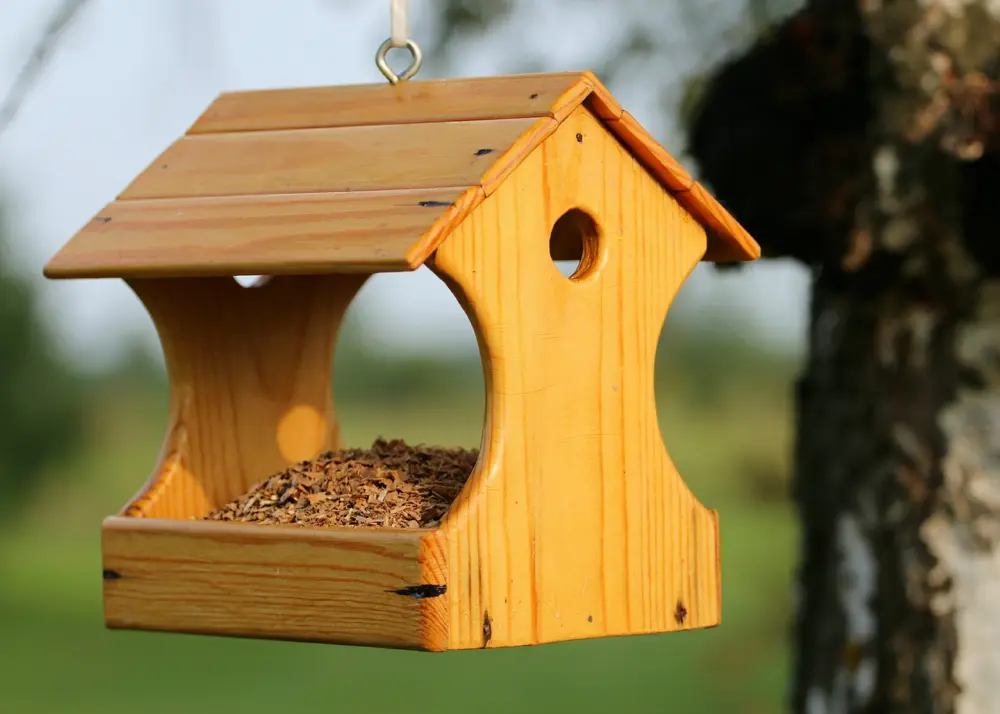
Reliable free bird feeder plans for a first wooden build come from public agencies and extension services, and they cover three simple designs: an open platform (tray) feeder, a roofed hopper feeder, and a hanging log feeder for peanut butter or suet. Below are four sources with real plans or instructions, what each design needs, which wood the plans call for, and how to mount the finished feeder on a pole. We link to every plan rather than copying it, because the cutting diagrams and patterns only make sense at the publisher’s scale.
This page is general product information, not repair or electrical safety advice. Follow the safety instructions in your product’s manual, supervise children, and contact the manufacturer or an authorized service center if a product sparks, overheats, or has a damaged cord.
Free Bird Feeder Plans Worth Building
Each plan below is free to view or download. The details listed are taken from the plan itself.
| Plan | Design | Published by | What the plan specifies |
|---|---|---|---|
| Hopper-Style Bird Feeder Plan | Roofed hopper on a pipe mount | Sac County, Iowa (conservation resources) | Parts cut from one 1×8 board 8 feet long; a 1/8 x 7 x 13 inch clear acrylic hopper panel; a screen base; mounts on 1 1/4 inch threaded pipe with a pipe flange; wood choice of cedar, redwood, cypress, or painted white pine; cutting diagram, materials list, and full-size patterns |
| Bird Feeder/Planter | Hanging cedar tray with a gabled roof that can be planted | Washington State University Extension (a Master Gardener program handout) | Pieces cut from cedar fencing boards 5 1/2 inches wide and 6 feet long; a 1/8 inch mesh screen bottom; assembly with a brad nailer or 4d box nails and waterproof glue |
| Providing for Backyard Wildlife | Platform bird feeder, suet feeder, and a corn cob squirrel and dove feeder | Texas Parks and Wildlife Department (archived by the UNT Libraries Portal to Texas History) | Drawn plans; the brochure says the corn cob feeder is made of scrap wood and that a squirrel feeder reduces squirrel raids on bird feeders |
| Log feeder with Marvel Meal | Hanging log with drilled holes | Penn State Extension; also the Audubon Guide to Bird Feeding and the U.S. Fish and Wildlife Service | No cut list needed: holes in a hanging log, dowel, or dead branch, packed with a peanut butter mix or suet |
The hopper plan is the most complete of the four: it is four pages long, with an exploded view, a materials list, and patterns you print at full size. The Washington State handout is shorter and is cut from cedar fencing boards rather than a single wide board. Treat the Texas brochure as a set of ideas with drawings rather than a step-by-step guide.
Choosing a Design for the Birds You Want
Pick the design before the wood. The Audubon Guide to Bird Feeding says sparrows, juncos, and towhees usually feed on the ground, finches and cardinals in shrubs, and chickadees, titmice, and woodpeckers in trees, and recommends table-like feeders for ground-feeding birds, hopper or tube feeders for shrub and treetop feeders, and suet feeders well off the ground.
- Platform (bird table). The U.S. Fish and Wildlife Service’s Bird Feeding fact sheet describes it as a shallow wooden box with a screen bottom that can sit on the ground, on a stump, or clamped to a deck railing. It is the easiest to build and the hardest to keep clean: a University of Florida IFAS Extension publication says platform feeders have been cited in studies as having a higher rate of disease transmission, because droppings collect on the platform and mix with the food, and recommends a wire mesh bottom so rain can wash droppings away.
- Hopper (house-style feeder). The same USFWS fact sheet describes a hopper as a platform feeder with a roof and sides that hold the seed dry inside. More parts and more angles, but the seed stays drier.
- Log feeder. The Audubon guide suggests stuffing one part peanut butter mixed with five parts cornmeal into holes drilled in a hanging log, and USFWS describes packing a peanut butter and cornmeal mix (or suet) into carved holes in a wooden dowel or dead branch. Penn State says its Marvel Meal can be pressed into the holes of a log feeder. These suit woodpeckers, chickadees, and titmice, and they belong to the cold months, since USFWS says suet and peanut butter can melt and turn rancid in warm weather.
USFWS also lists three things to look for in any feeder, homemade or bought: durability, capacity (small feeders empty sooner, larger ones are heavier), and a design that keeps seed dry and is easy to fill and clean. It adds that squirrels can chew through wood and plastic but not metal and wire, which is worth remembering if squirrels already raid your yard. For a broader look at how designs compare, the types of bird feeders differ more in who they serve than in how they are built.
Wood and Materials
The two plans that name a wood both choose rot-resistant species. The hopper plan lists cedar, redwood, cypress, or painted white pine; the Washington State plan is cut from cedar fencing boards and warns that fencing varies in thickness, which can change assembled lengths by up to an eighth of an inch.
On treated lumber, the sources do not line up. NestWatch says to use untreated, unpainted wood such as cedar, pine, or cypress, and non-pressure-treated exterior plywood for larger boxes, but that advice is written for nest boxes, not feeders. The Maryland Department of Natural Resources says platform feeders can be made from treated plywood with raised edges. We take the cautious path and build with untreated cedar or pine, as both feeder plans above do, so seed and birds never sit on treated wood.
For fasteners and hardware, follow the plan you choose. The hopper plan calls for #8 deck screws set in countersunk shank holes, plus #10 deck screws and a #10 stainless steel screw for the pipe mount and flange. The Washington State plan is nailed and glued with waterproof glue. Screen or mesh for the floor appears in both.
How to Build a Wooden Bird Feeder From a Plan
The order of work is similar for any of these plans. Use the plan’s own measurements at each step; the outline below is a checklist, not a substitute for the drawings.
- Print and read the whole plan. Check the materials list against your lumber before you cut. If the plan includes patterns, print them at the stated scale (the hopper plan notes that one half-size pattern must be enlarged 200 percent).
- Lay out the cuts. Follow the cutting diagram so the parts come out of the board the way the designer intended, and label each part with the plan’s letter.
- Cut and drill. Make the straight cuts, then the bevels and angled roof cuts, then drill pilot or shank holes where the plan shows them.
- Build the base frame first. Both plans center on a tray with a screen or mesh floor; add the screen at the step where the plan places it.
- Add the ends, hopper, and roof. Our suggestion: dry-fit before you fasten, so a roof panel that is a little long can be trimmed instead of forced.
- Mount it. Attach the hanger or pipe mount last, once the feeder is square.
A short safety note: saws and drills are adult work. Read and follow the instructions and safety guidance that come with each tool, and if a child is helping, give them sanding, assembly with a pre-drilled part, or filling the feeder.
Mounting a Homemade Feeder on a Pole
A pole mount is where a do-it-yourself feeder gains the most. The hopper plan shows a pipe mount board fixed to a 1 1/4 inch pipe flange, which screws onto 1 1/4 inch pipe threaded on one end, so the pole is a length of standard threaded pipe. Maryland DNR says platform feeders are best used on poles that have predator baffles on them.
Placement numbers come from the Audubon guide: pole-mounted feeders about five feet off the ground, protected by a cone-shaped baffle at least 17 inches in diameter below the feeder, and at least 10 feet from the nearest shrub, tree, or other tall structure. The University of Florida publication gives 10 to 15 feet from tree trunks and overhanging limbs. How to keep squirrels from climbing a bird feeder pole is its own topic, and the pole surface, baffle, and spacing all matter.
For the spot itself, the Audubon guide recommends feeders less than three feet from a window or more than 30 feet away to reduce collisions. The rest of the decision about where to put a bird feeder, such as cover, view, and access for refilling, applies to homemade feeders the same way.
Caring for a Wooden Feeder
Wooden feeders have their own cleaning method. The University of Florida publication says to clean wooden bird feeders with hot soapy water and a bristled brush, and to clean the ground below feeders regularly to prevent a build-up of hulls, uneaten seed, and waste. The Audubon guide warns that uneaten seed can become soggy and grow mold, which is one more reason the screen or mesh floor in both plans matters. If you go on to nest boxes, the same woodworking skills carry over when you build a birdhouse, though the plans and measurements are different.
Not ready for saws and screws? A DIY bird feeder does not have to be wooden; pine cones, citrus halves, and seed cakes need no tools at all.
How We Put This Guide Together
This guide is based on published plans and guidance, not on feeders we built ourselves. We read each plan in full and summarize only what it states; for measurements and patterns, use the original. Design and placement guidance comes from the Audubon Guide to Bird Feeding, the U.S. Fish and Wildlife Service, University of Florida IFAS Extension, Penn State Extension, the Maryland Department of Natural Resources, and NestWatch. Our general method is on the How We Review page.
Bird Feeder Plans: FAQ
Where can I find free bird feeder plans?
Start with public sources: the hopper plan posted by Sac County, Iowa, the Washington State University Extension feeder handout, and the Texas Parks and Wildlife Department brochure linked above. State wildlife agencies and county extension offices sometimes post more, and they are worth checking for your area.
What is the easiest wooden bird feeder to build?
A log feeder: drill holes in a hanging log or branch and pack them with a peanut butter and cornmeal mix, as the Audubon guide and USFWS describe. For seed, a platform feeder is the simplest box to build, a shallow frame with a screen bottom.
What wood should I use to build a bird feeder?
The plans above use cedar, redwood, cypress, or painted white pine. Sources disagree on treated plywood, so we suggest untreated cedar or pine for any surface that holds seed.
Should a wooden bird feeder have a screen bottom?
For a platform, yes. The USFWS fact sheet describes the platform feeder with a screen bottom, and the University of Florida publication recommends a wire mesh bottom so rain can wash droppings away. Both plans above include a screen or mesh floor.
How do you build a bird feeder pole for a homemade feeder?
The simplest approach is the one in the hopper plan: a 1 1/4 inch pipe flange screwed to the feeder’s mount, threaded onto 1 1/4 inch pipe. Set it so the feeder sits about five feet up with a cone baffle at least 17 inches across below it, and at least 10 feet from trees and shrubs, per the Audubon guide.
Final Thoughts
Good bird feeder plans are free if you know where to look. Choose the design for your birds (platform, hopper, or log), build it from untreated cedar or pine with a screen floor, follow the plan’s own cutting diagram, and mount it on a baffled pole away from trees. More feeder guides are in our Bird Feeders section.
About the author

Eric Hunter is a North Carolina-based backyard birding enthusiast with nine years of experience observing birds and maintaining feeding stations. A freelance editor by trade, Eric combines an interest in bird behavior with practical research into feeders, seed mixes, and mounting accessories. As Editor-in-Chief, Eric oversees editorial standards and reviews articles for clarity, reliable sourcing, and useful guidance for backyard birders.