
Bird Seed Cake Recipe: How to Make Bird Seed Cakes at Home
Bird seed cakes from four published recipes: Missouri's basic block, Audubon's cubes, Penn State's Marvel Meal, a hanging bell, and what to leave out.
 Updated November 1, 2026
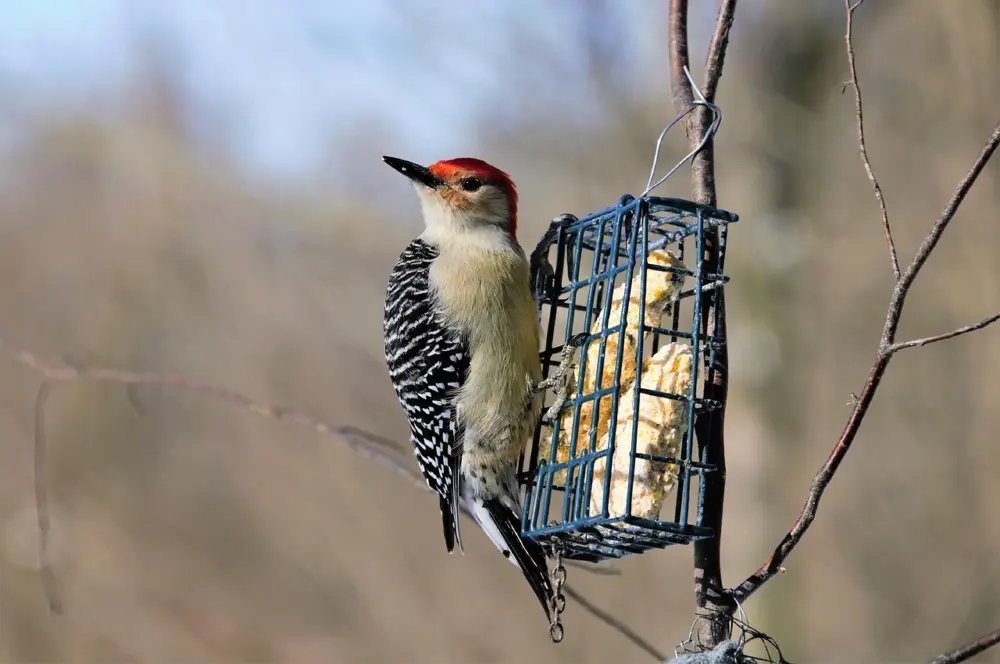
Bird seed cakes are blocks of seed held together with fat, set in a mold, and hung in a wire suet cage or from a branch. The simplest recipe, from the Missouri Department of Conservation, needs five ingredients: 2 1/2 cups of birdseed, 1/2 cup of oats, 1/4 cup of cornmeal, 1 cup of vegetable shortening, and 1/2 cup of peanut butter. You melt the fat, stir it into the dry mix, pack it into a container, and freeze it overnight. This bird seed cake recipe guide covers that method, three published variations (including a hanging seed bell), what to leave out, and why homemade cakes are a cold-weather food.
This guide covers homemade treats for wild birds. It is not advice on bird nutrition or health care. Leave out salted or sugared ingredients, take down any cake that turns soft, rancid, or moldy, and if you see a sick or injured bird, contact a licensed wildlife rehabilitator or your state wildlife agency rather than treating it yourself.
Bird Seed Cakes at a Glance: Four Published Recipes
Every recipe below comes from a public agency, a university extension service, or Audubon. They differ mainly in the binder and the mold. Quantities are as published.
| Recipe | Binder | Dry ingredients | Mold and use |
|---|---|---|---|
| Missouri Department of Conservation homemade suet | 1 cup vegetable shortening, 1/2 cup peanut butter | 2 1/2 cups birdseed, 1/2 cup oats, 1/4 cup cornmeal | Small shallow bowl or sandwich container, frozen overnight, then a suet cage |
| Audubon magazine vegetarian suet | 1 1/2 cups shortening, 3/4 cup nut butter | 3 1/2 cups wild bird seed, 1 cup quick oats, 1/2 cup cornmeal | Ice cube tray, frozen one to two hours, then a suet feeder |
| Penn State Extension Marvel Meal | 1 cup peanut butter, 1 cup vegetable shortening | 4 cups cornmeal, 1 cup flour, a handful of sunflower seeds (optional) | Frozen into blocks for a suet feeder, sliced onto a tray, or pressed into a log feeder |
| Utah State University Extension fat cakes | 1 part lard or suet | 2 parts dry mix (bird seed, cornmeal, unsalted seeds and nuts) | Single-serving yogurt cup with a string through the bottom, frozen, then hung in a tree |
Two patterns stand out. First, all four use a solid fat, so every one of them softens in warm weather. Second, by our arithmetic from the published quantities, the binder and the dry ingredients sit close to a 1 to 2 ratio in the Missouri, Audubon, and Utah State recipes, and a little drier in Marvel Meal, where most of the dry mix is cornmeal and flour.
How to Make Bird Seed Cakes: The Basic Recipe
This is the Missouri Department of Conservation recipe from its Xplor magazine. It sets in a small shallow bowl or sandwich container and then goes into a wire suet cage.
You need:- 2 1/2 cups of birdseed
- 1/2 cup of oats
- 1/4 cup of cornmeal
- 1 cup of vegetable shortening
- 1/2 cup of peanut butter
- Two large microwave-safe bowls, a spoon, measuring cups, a small shallow bowl or plastic sandwich container for a mold, and a suet cage
- Mix the dry ingredients. Stir the birdseed, oats, and cornmeal together in one bowl.
- Melt the binder. Put the shortening and peanut butter in the second bowl and microwave until they melt into a thick liquid. Missouri’s recipe says this takes less than a minute and warns that the bowl may be hot.
- Combine. Stir the melted fat, pour it over the dry ingredients, and mix until everything is coated.
- Mold and freeze. Spoon the mixture into the shallow bowl or sandwich container and leave it in the freezer overnight.
- Unmold. If the cake sticks, set the container in shallow warm water until the edges soften, then ease it out with a butter knife.
- Hang it. Put the cake in a suet cage and hang it in a shady spot you can see from the house.
A practical note of our own, not part of the published recipe: measure the inside of your suet cage before you choose a mold, and pick a container with straight sides close to that size, so the cake fits the cage without crumbling when you trim it.
Three Variations Worth Knowing
Audubon’s vegetarian seed cakes (ice cube tray)
The Audubon magazine recipe makes small cubes instead of one block. Mix 3 1/2 cups of wild bird seed, 1 cup of quick oats, and 1/2 cup of cornmeal. In a separate bowl, melt 1 1/2 cups of shortening with 3/4 cup of any nut butter and stir until combined. Pour the fat into the dry mix, stir, spoon it into an ice cube tray, and freeze for one to two hours before placing the cubes in a suet feeder. Audubon suggests looking for a palm oil free shortening and notes that the recipe is not recommended when outdoor temperatures are above 50°F. Small cubes make it easy to put out a little at a time.
Penn State’s Marvel Meal (seed blocks without much seed)
Marvel Meal is mostly cornmeal: 1 cup of peanut butter, 1 cup of vegetable shortening, 4 cups of cornmeal, 1 cup of flour, and an optional handful of sunflower seeds. Penn State Extension says it can be frozen into blocks for a suet feeder, sliced into chunks for a feeder tray, pressed into the holes of a log feeder, or smeared onto tree bark, and that it is a favorite of chickadees, titmice, wrens, and even bluebirds. The University of Illinois Extension reprints the same recipe, credited to Penn State.
Utah State’s fat cakes (a hanging bird seed bell)
For a bird seed bell that hangs without a cage, Utah State University Extension gives a ratio rather than a recipe. Warm 1 part fat (lard or suet) in a heavy-bottomed pan, then stir in 2 parts dry mix, which can be any combination of bird seed, cornmeal, unsalted seeds, and nuts. Poke a hole in the bottom of a single-serving yogurt cup, thread a string through it, and press the warm mixture into the cup around the string. Freeze the cups, cut the cup away once the cake is hard, and hang the cake in a tree. The same publication says unsalted peanut butter may be added along with equal parts dry mix. The cup gives you a tapered, bell-like shape, and the string sets into the cake so nothing has to be tied on later.
Can You Make Bird Seed Cakes With Gelatin?
Yes, though none of the four cake recipes above uses it. The gelatin method we found is an Audubon magazine recipe written for bird seed ornaments: 1 tablespoon of unflavored gelatin bloomed in 2 tablespoons of cold water, dissolved with 1/3 cup of boiling water, then stirred into 2 cups of birdseed, packed into molds, and refrigerated overnight. That recipe is written for small cookie-cutter shapes. Doubling it for a cake-sized mold is our own extrapolation, not a published recipe, so treat a gelatin cake as an experiment: pack it firmly and take it down if it softens or crumbles after rain. A gelatin cake has no fat, which makes it a seed treat rather than a suet substitute.
What to Leave Out of Homemade Seed Cakes
Most problems with homemade cakes start with kitchen ingredients that seem harmless.
- Salt and sugar. The Maryland Department of Natural Resources says salted or sugared foods can be dangerous for small birds. None of the published recipes above calls for honey, corn syrup, or sugar, so leave them out.
- Bacon grease and meat drippings. University of Arkansas Extension says bacon drippings contain meat preservatives that are unhealthy for birds, and Utah State’s fat cake recipe says to avoid salty items such as salted nuts or bacon. Use plain lard, suet, or shortening.
- Salted or flavored nuts and seeds. Utah State specifies unsalted seeds and nuts. Project FeederWatch says to avoid salted peanuts or peanuts roasted with coatings or flavorings.
- Pure peanut butter as the only binder. The Illinois Department of Natural Resources says birds can have trouble swallowing pure peanut butter and that it is better used in suet mixtures. Every recipe here mixes it with fat and dry ingredients.
- Anything moldy. FeederWatch says to throw out fruit that becomes moldy because some molds create toxins harmful to birds. Check dried fruit and nuts before they go into the bowl.
Oats are a judgment call. The Missouri and Audubon recipes both include them, while the Illinois DNR article cautions that foods such as coconut and dry oats swell with moisture after they are eaten and can cause internal injuries. In the published recipes the oats are mixed into fat rather than served dry, but if you would rather avoid the question, replace the oats with the same amount of cornmeal, which every recipe here already uses. Leave out dried coconut for the same reason.
For the seed itself, a mix heavy in black-oil sunflower does more than a cheap filler blend. The Audubon Guide to Bird Feeding says black-oil sunflower seed appeals to the greatest number of birds and that relatively few species prefer milo, wheat, and oats. The label checks that point to the best bird seed mix for wild birds apply here too.
Hanging Seed Cakes
The Audubon guide says suet attracts insect-eating birds such as woodpeckers, wrens, chickadees, nuthatches, and titmice, and recommends placing it in special feeders or net bags at least five feet above the ground, out of reach of dogs and squirrels. To reduce window strikes, the same guide recommends feeders less than three feet from a window or more than 30 feet away. Missouri’s recipe adds a shady spot you can see from the house.
If you hang a bell or cake by string, keep it short and remove it when the cake is gone. A U.S. Fish and Wildlife Service article warns that string, twine, and yarn can wrap around the legs and necks of birds and nestlings. That warning is about loose fibers offered as nesting material, but a dangling leftover hanger is the same hazard.
Seed cakes draw more than woodpeckers. University of Illinois Extension notes that European Starlings can be a problem at suet and that cages which make birds hang upside down to feed are a pose starlings do not prefer. If starlings already crowd your yard, plan how to keep starlings off suet before you put out a batch.
Weather, Storage, and Clean-Up
Homemade seed cakes are a cold-weather food, and the sources are consistent on this. Missouri’s recipe says suet can go bad and make birds sick when it stays warm for too long, and advises against leaving it outside when temperatures rise above 50°F. Audubon’s vegetarian recipe gives the same 50°F limit. The U.S. Fish and Wildlife Service’s Bird Feeding fact sheet says suet and peanut butter are best used in winter because both can melt and turn rancid in warm weather, and Arkansas Extension says raw suet turns rancid in warmer temperatures.
The warm-weather alternative is not a recipe. Penn State says processed suet cakes are made so they do not turn rancid in warmer weather, and FeederWatch says suet may become rancid in hot weather if it has not been specially processed. Choosing among the best suet cakes sold for that purpose is a shopping decision rather than a kitchen project.
Our suggestions, based on those warnings:
- Make cakes in late fall and winter, and check the forecast before you hang one. A sunny afternoon can soften a cake even when the morning was cold.
- Keep extra cakes frozen until you need them, since every recipe here sets in the freezer. None of the sources gives a storage time, so make small batches you will use within the season.
- Take down any cake that turns soft, smells off, or shows mold, and throw it away.
- Clean up crumbs under the cage. The Audubon guide warns that uneaten seed can become soggy and grow mold, and recommends raking up spilled grain and hulls.
If you also feed loose seed, the cakes sit alongside it rather than replacing it, and how suet vs bird seed fits your feeding plan is a separate decision.
How We Put This Guide Together
This guide is based on published sources, not on cakes we made and hung ourselves. The recipes come from the Missouri Department of Conservation, Audubon magazine, Penn State Extension, and Utah State University Extension. Ingredient and weather warnings come from the Maryland and Illinois Departments of Natural Resources, University of Arkansas Extension, University of Illinois Extension, Project FeederWatch, the Audubon Guide to Bird Feeding, and the U.S. Fish and Wildlife Service. Where we add a suggestion of our own, we label it. Our general method is on the How We Review page.
Bird Seed Cakes: FAQ
How do you make bird seed cakes with gelatin?
The published gelatin method is Audubon’s ornament recipe: 1 tablespoon of unflavored gelatin, 2 tablespoons of cold water, and 1/3 cup of boiling water for every 2 cups of birdseed, packed into a mold and refrigerated overnight. It is written for small shapes, so a larger cake is untested territory; pack it firmly and take it down if it crumbles.
Can I make bird seed cakes without suet or lard?
Yes. The Missouri Department of Conservation and Audubon recipes both use vegetable shortening with peanut butter or another nut butter, and Penn State’s Marvel Meal does the same. They are still fat-based, so the same cold-weather limit applies.
Can I use bacon grease in a bird seed cake?
We would not. University of Arkansas Extension says bacon drippings contain meat preservatives that are unhealthy for birds, and Utah State University Extension says to avoid salty items such as bacon in fat cakes. Plain lard, beef suet, or shortening does the same job.
Are oats safe in homemade seed cakes?
The sources do not agree. Missouri and Audubon include oats in their recipes, while the Illinois DNR cautions that dry oats swell with moisture after they are eaten and can cause internal injuries. Swapping the oats for cornmeal avoids the question without changing how the cake holds together much.
Why do homemade seed cake recipes say not to use them above 50 degrees?
Because the fat softens and spoils. The Missouri Department of Conservation says suet can go bad and make birds sick when it stays warm too long, and the U.S. Fish and Wildlife Service says suet and peanut butter can melt and turn rancid in warm weather. Both the Missouri and Audubon recipes give 50°F as the limit.
Final Thoughts
Bird seed cakes take one bowl of dry ingredients, one bowl of melted fat, a mold, and a cold night. Start with the Missouri recipe for a cage-sized block, try Audubon’s ice cube tray for small portions or Utah State’s yogurt cup for a hanging bell, leave out salt, sugar, and bacon grease, and keep them for weather below 50°F. More guides to seed and feeding are in our Bird Food section.
About the author

Eric Hunter is a North Carolina-based backyard birding enthusiast with nine years of experience observing birds and maintaining feeding stations. A freelance editor by trade, Eric combines an interest in bird behavior with practical research into feeders, seed mixes, and mounting accessories. As Editor-in-Chief, Eric oversees editorial standards and reviews articles for clarity, reliable sourcing, and useful guidance for backyard birders.